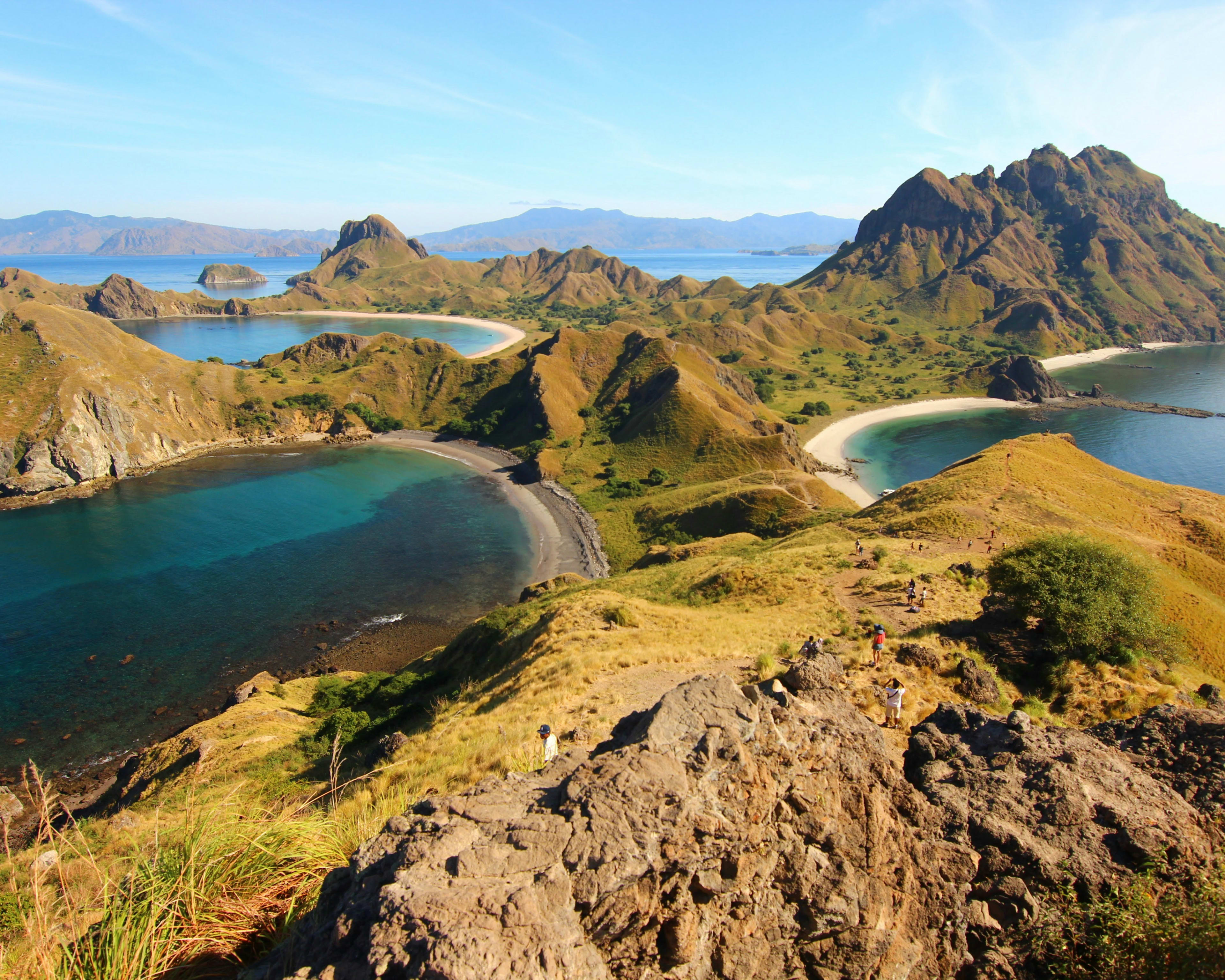
Beyond the well-known shores of Bali, Indonesia is made up of a vast tapestry of distinct regional identities, untamed nature, spiritual traditions, and vibrant local life across thousands of volcanic islands. Java pulls travelers into its cultural core with towering 9th-century stone monuments, active volcanic peaks like Mount Bromo, and the artistic heritage of Yogyakarta. Further east, Komodo National Park offers rugged, sunny landscapes home to prehistoric Komodo dragons and world-class marine life. The remote karst islands of Raja Ampat showcase an array of marine biodiversity, while the dense, ancient rainforests of Sumatra provide sanctuary for wild orangutans amidst crater lakes and traditional villages.
Along the way, travelers can encounter bustling night markets, regional cuisines rich with spices, and a deeply rooted warmth across distinct ethnic cultures. From volcanic trekking to ancient heritage, and dive sites to wildlife encounters, Indonesia offers an expansive journey of wild adventures and endless discovery.
Need to know
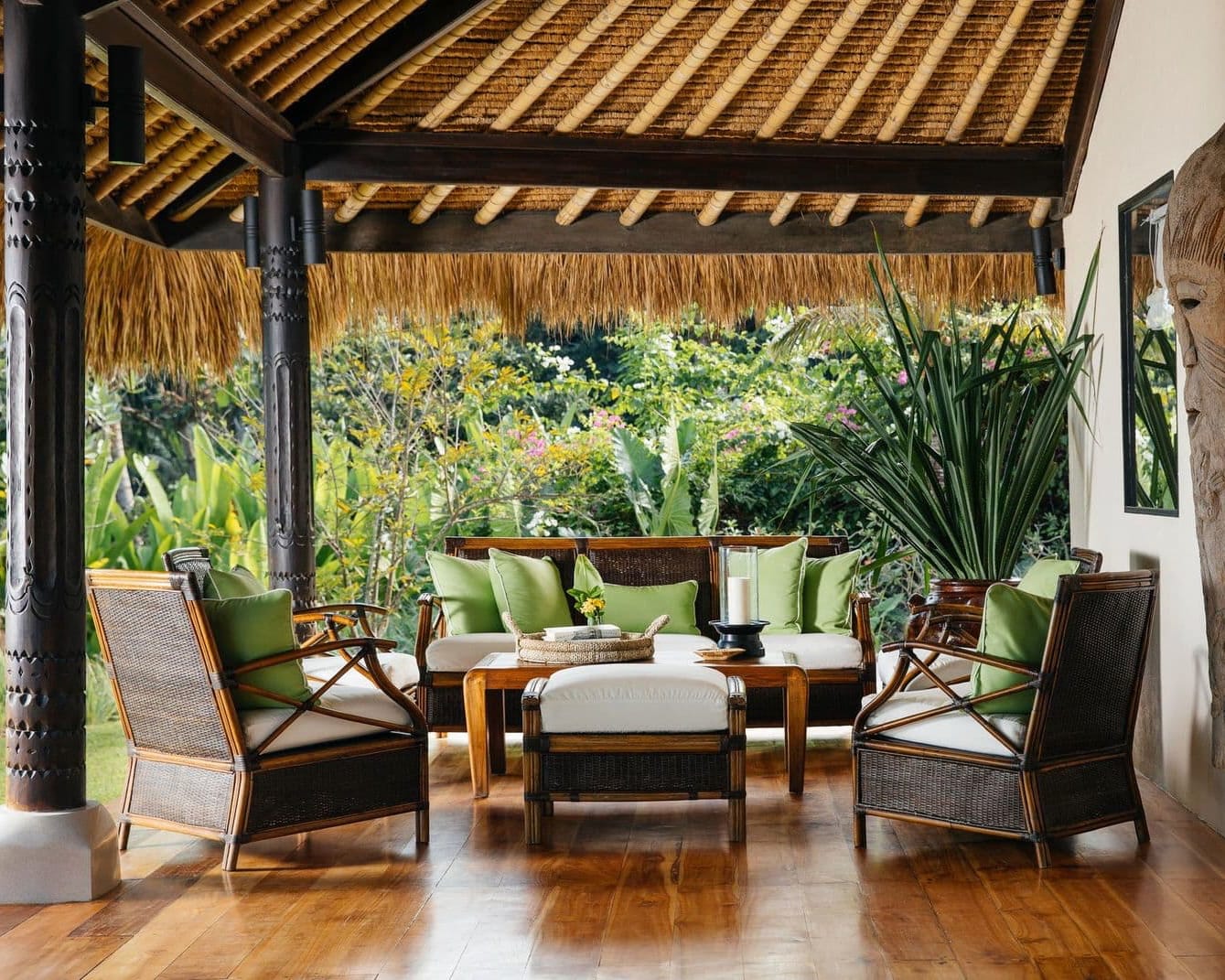
Image courtesy of NIHI Sumba
Exploring Indonesia requires navigating an expansive, wildly diverse region with variable climates and distinct local cultures.
Currency
Indonesia uses the Indonesian Rupiah (IDR). Credit cards and digital payments are standard at high-end hotels, upscale restaurants, and major shops, but cash is essential for local markets and remote regions. Tipping is not traditional, though rounding up taxi fares or leaving a small cash tip for attentive service and local guides is widely appreciated.
Languages
Indonesian is the official language spoken across the country, alongside hundreds of local regional languages. English is widely understood in major tourist hubs, but learning a few basic Indonesian phrases will prove helpful when traveling off the beaten path.
- Key phrases: selamat pagi (good morning), terima kasih (thank you), tolong (please), apa kabar? (how are you?), ya/tidak (yes/no), saya tidak bisa bahasa Indonesia (I don’t speak Indonesian), bisa bahasa Inggris? (do you speak English?)
Airports
Jakarta (CGK) serves as the country’s primary long-haul gateway, offering non-stop routes across Europe, Asia, and Oceania. North American travelers will need to connect through major hubs like Singapore, Tokyo, or Hong Kong. From there, a number of regional airports connect travelers to Yogyakarta (YIA), Surabaya (SUB), Lombok (LOP), Flores (LBJ), and beyond.
Transportation
Hiring an experienced local driver that doubles as a guide is the most practical option. Ride-hailing apps like Gojek and Grab are widely used on major islands, while metered taxis remain the most reliable choice in major urban hubs.
Best time to visit
Indonesia is tropical year-round, with rainfall and regional weather patterns varying across the archipelago. Much of Java and western Indonesia experiences a drier season from April to October, while the wetter season generally runs from November to March. Komodo and Flores are typically driest from April to October, making this a popular window for hiking, island hopping, and wildlife encounters. Farther east, Raja Ampat follows a different seasonal pattern, with October to April generally bringing calmer seas and better conditions for diving and snorkeling, while May to September tends to be windier and wetter.
Ideal length of stay
Two weeks is the minimum ideal window to justify the long journey and navigate the logistics of Indonesia’s vast geography. Plan on three to four nights per destination to comfortably explore Java’s cultural heartland, Komodo’s island trails, or North Sumatra’s jungles.
What to wear
Indonesia’s tropical climate calls for lightweight, breathable fabrics like linen or cotton to handle the heat and humidity. Beyond tourist-heavy beach zones, the country leans conservative so pack modest clothing that covers shoulders and knees. Lightweight layers, a rain shell, and sturdy hiking boots are necessary if tackling volcano treks, while comfortable slip-on shoes make removing footwear at guesthouses and sacred sites significantly easier.
Travel tips
- Visa requirements: Travelers may be able to secure a 30-day Visa on Arrival at major airports, or apply online beforehand—confirm before departure. Additionally, travelers must complete an online arrival card within three days prior to arrival.
- Natural hazards: Volcanic eruptions, ash clouds, and earthquakes are common occurrences; keep track of local monitoring alerts and have flexible travel plans.
- Medications: Some medications that are legal in the U.S. are illegal in Indonesia, so confirm well in advance. Keep all medicines in original labeled packaging accompanied by an official signed doctor’s note identifying the medication, dosage, and diagnosis.
- Local laws and customs: Smoking bans are enforced in many public spaces, the legal drinking age is 21, and severe penalties exist for insulting state institutions or officials. Unmarried couples and LGBTQ+ travelers should also exercise discretion.
- Health and safety: Consult a medical professional prior to departure to review recommended vaccinations. Standard petty theft and pickpocketing can occur in crowded areas, so keep valuables secure. Opt for sealed bottled water.
Lombok
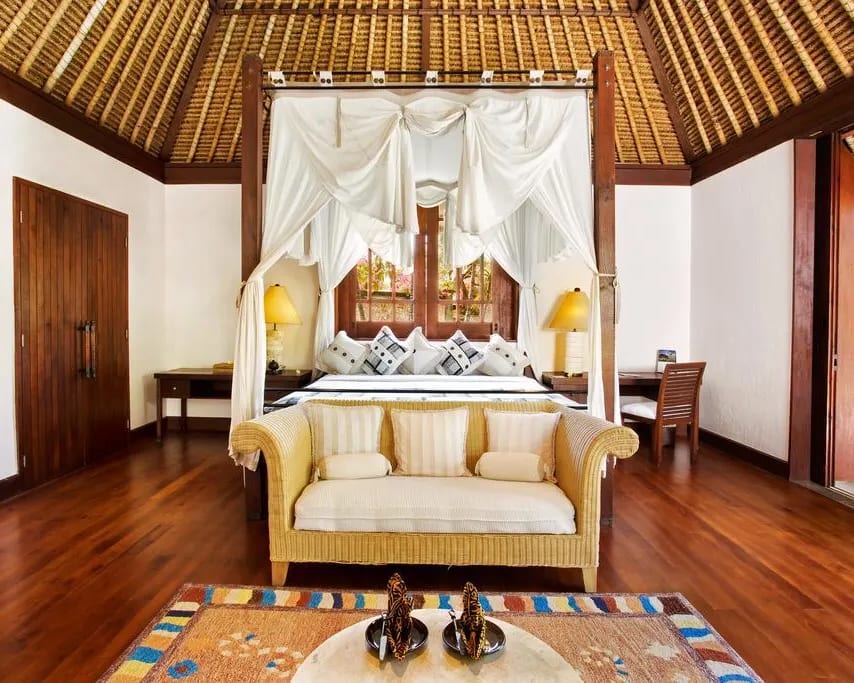
Image courtesy of The Oberoi Beach Resort, Lombok
Lombok offers a quieter, wilder counterpoint to its western neighbor, Bali, with a distinct culture anchored by the indigenous Sasak people. South Lombok, centered around Kuta, is defined by dramatic coastal scenery, world-class surf breaks, and sweeping white-sand beaches like Selong Belanak and Tanjung Aan. Moving north, the island’s interior rises sharply into the highlands of Mount Rinjani—Indonesia’s second-highest active volcano—where multi-day treks draw hikers to its crater lake and surrounding jungle waterfalls. Off the northwest coast, the car-free Gili Islands offer diving, turtle watching, and a laid-back beach scene, while West Lombok’s Senggigi coast functions as a practical resort hub with sunset views.
Where to stay
Hotel Tugu Lombok: Situated along the quiet white sands of Sire Beach, this eclectic beachfront sanctuary doubles as a living museum, housing a massive collection of Indonesian antiques, ancient artwork, and traditional thatched-roof villas that evoke old Java and Lombok.
- Perks include welcome amenities and an upgrade whenever possible.
The Oberoi Beach Resort, Lombok: Set within 24 acres of landscaped tropical gardens on Medana Bay, this polished retreat features thatched-roof villas and pavilions with private pools, marble bathrooms, and unobstructed sunset views across the water toward the Gili Islands.
- Perks include welcome amenities and extended check-in/out whenever possible.
Java
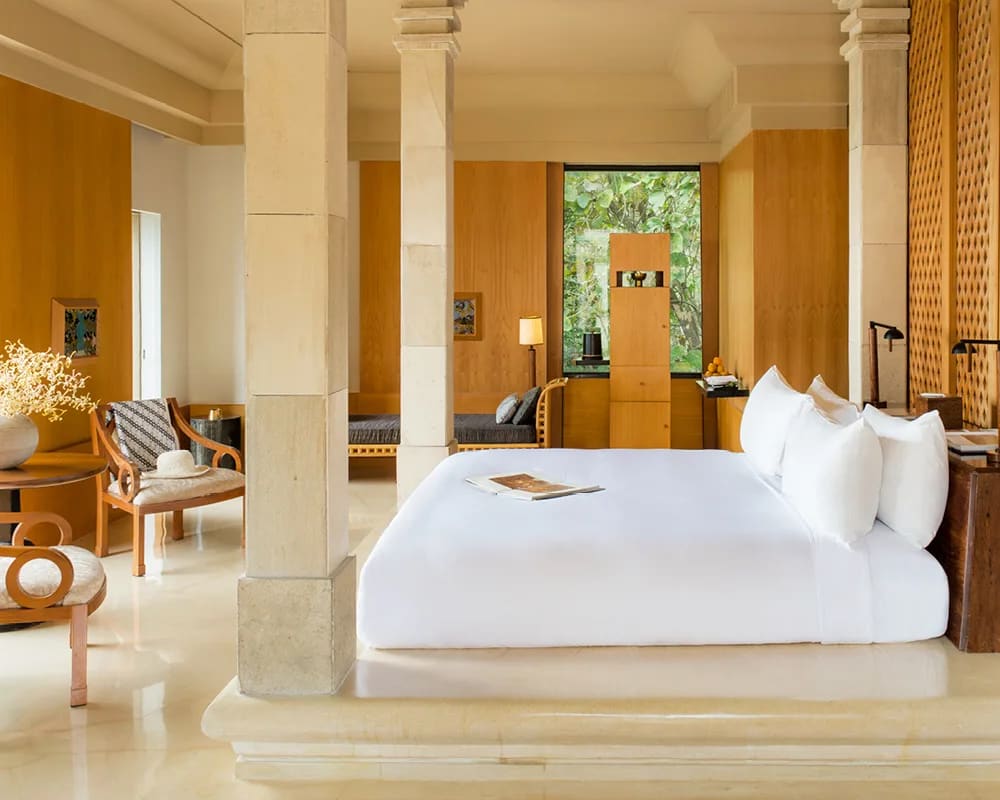
Image courtesy of Amanjiwo
Java is Indonesia’s geographic and cultural nerve center, anchored at its western edge by the sprawling, hyper-urban capital of Jakarta. In the center of the island, the pace shifts dramatically around Yogyakarta, the island’s artistic and royal heartland; it serves as the primary base for exploring the grand 9th-century Buddhist monument of Borobudur and the soaring Hindu spires of Prambanan. In the east, the landscape gives way to a raw, volcanic spine where travelers brave pre-dawn departures to hike Mount Bromo’s smoking crater, and the remote Ijen Crater to witness rare blue sulfur flames and the turquoise acid lake at its basin.
Where to stay
Amanjiwo: Modeled after the neighboring Borobudur, this iconic resort sits in a natural amphitheater framed by the Menoreh Hills, and offers an exclusive private train journey option from Jakarta for an unforgettable arrival experience.
- Perks includea $100 food and beverage credit, daily breakfast, an upgrade, and extended check-in/out whenever possible.
Flores and Komodo
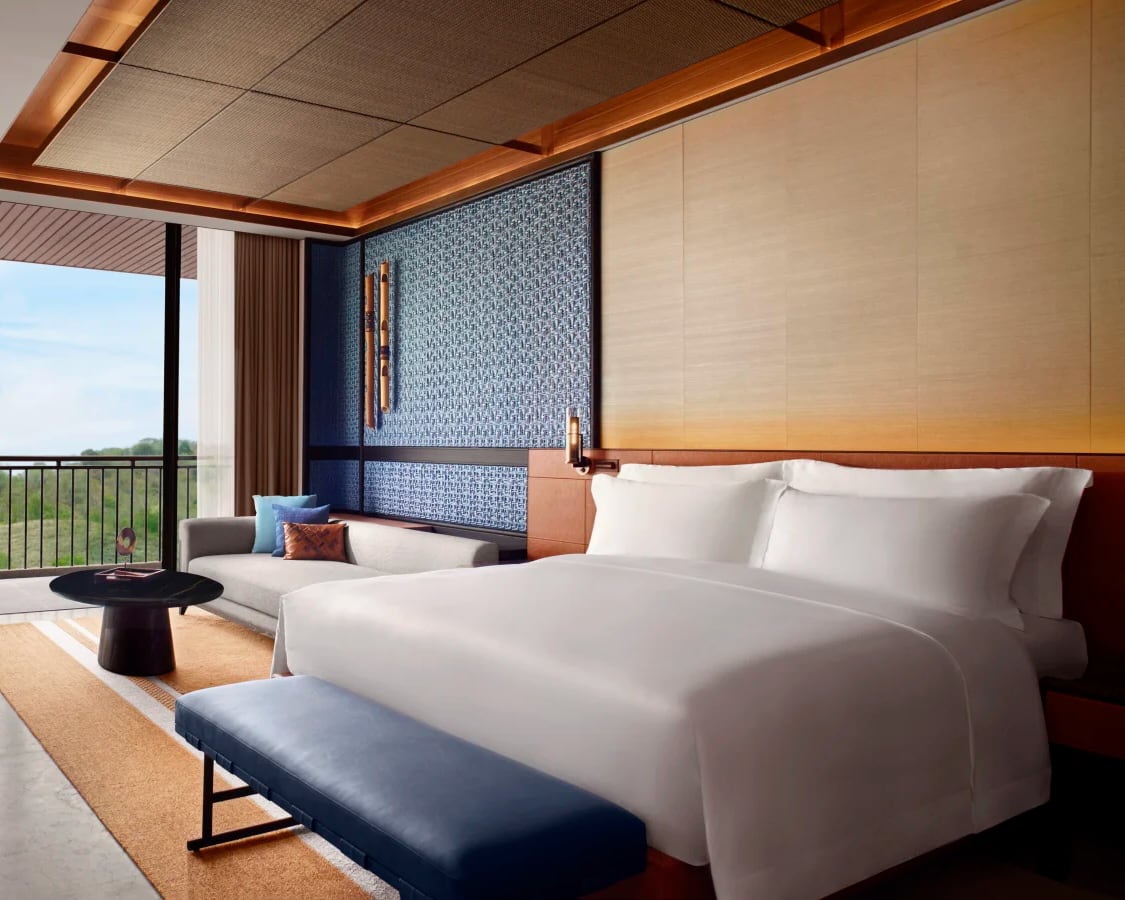
Image courtesy of TA’AKTANA, a Luxury Collection Resort & Spa
Flores is a rugged, mountainous island defined by traditional villages and dramatic volcanic landscapes, most famously the tri-colored crater lakes of Mount Kelimutu near Moni. At the island’s western tip, the former fishing village of Labuan Bajo has evolved into a thriving port hub, lined with sunset hill bars, seafood markets, and dive shops catering to island-hoppers. It serves as the primary gateway to Komodo National Park, where travelers can spot endemic Komodo dragons, trek the iconic ridge of Padar Island, and dive along vibrant coral reefs.
Where to stay
TA’AKTANA, a Luxury Collection Resort & Spa: An ultra-exclusive hideaway along the rugged coast, blending eco-conscious architecture with bespoke villas and suites designed for travelers looking for immersive experiences and easy access to Komodo National Park.
- Perks includea $100 hotel credit, welcome amenity, daily breakfast, an upgrade, and extended check-in/out whenever possible.
AYANA Komodo Waecicu Beach: Located on a tranquil cove, this luxury retreat features open-air oceanfront suites, a private pier with its own traditional phinisi sailing yacht, and multiple dining venues ideal for families and travelers seeking resort amenities.
Sumba
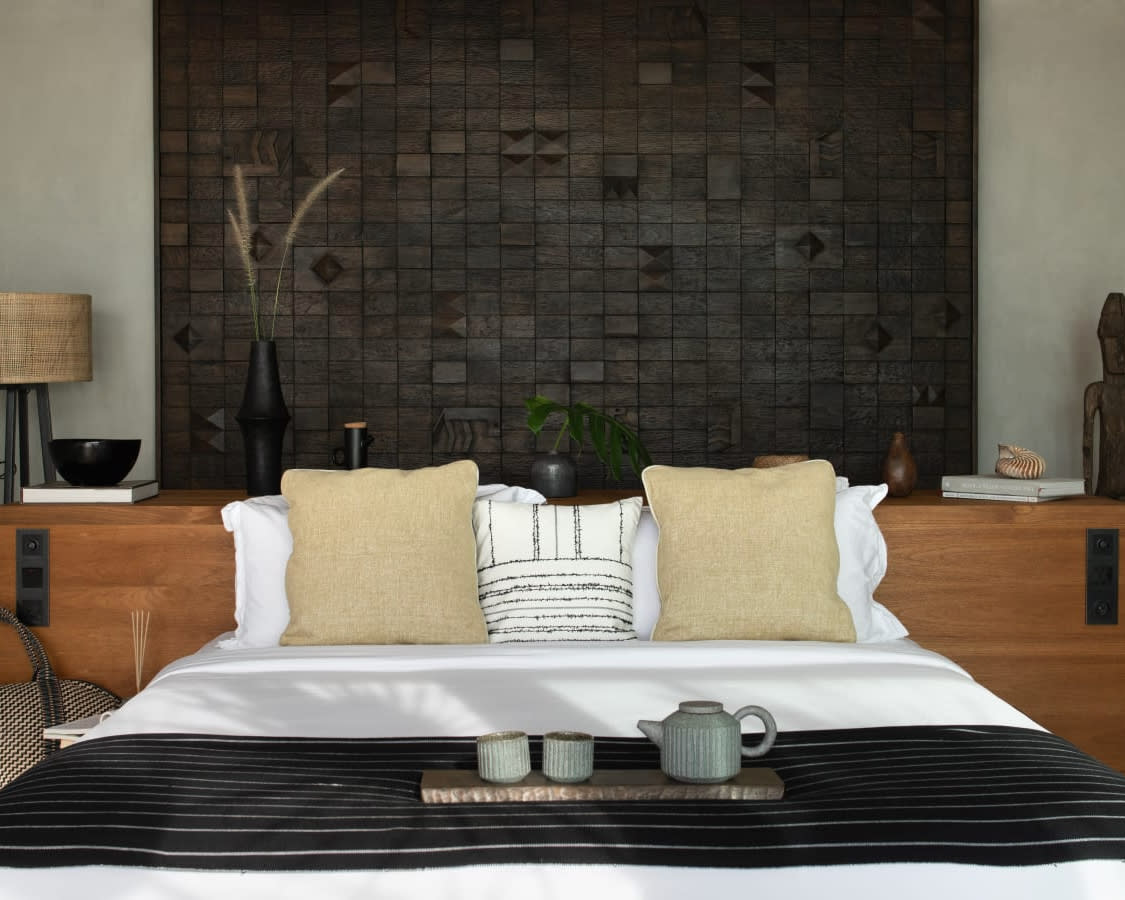
Image courtesy of Cap Karoso
Sumba lies south of Flores as one of Indonesia’s most culturally distinct and untamed frontiers. Characterized by dry, rolling savanna hills where traditional villages feature high-peaked thatched roofs, and megalithic stone tombs remain active. The coastlines, particularly in West Sumba, draw world-class surfers to empty, wind-swept beaches and heavy reef breaks, while interior excursions lead to pristine turquoise limestone pools like Weekuri Lagoon and secluded jungle waterfalls like Lapopu.
Where to stay
NIHI Sumba: This remote eco-luxury hideaway sits among tropical forest and rugged coastline, offering private pool villas, world-class surfing, horseback riding along the beach, and deep connections to local Sumbanese village philanthropic initiatives.
- Perks include a $100 hotel credit, daily breakfast, an upgrade, and extended check-in/out whenever possible.
Cap Karoso: Set on the shores of Southwest Sumba, this design-forward eco-resort pairs modern French sensibility with local traditions, featuring solar-powered villas, an organic farm, and a beach club anchored by quiet, untamed savanna landscapes.
- Perks include a $100 hotel credit, daily breakfast, welcome amenity, an upgrade, and extended check-in/out whenever possible.
Other islands
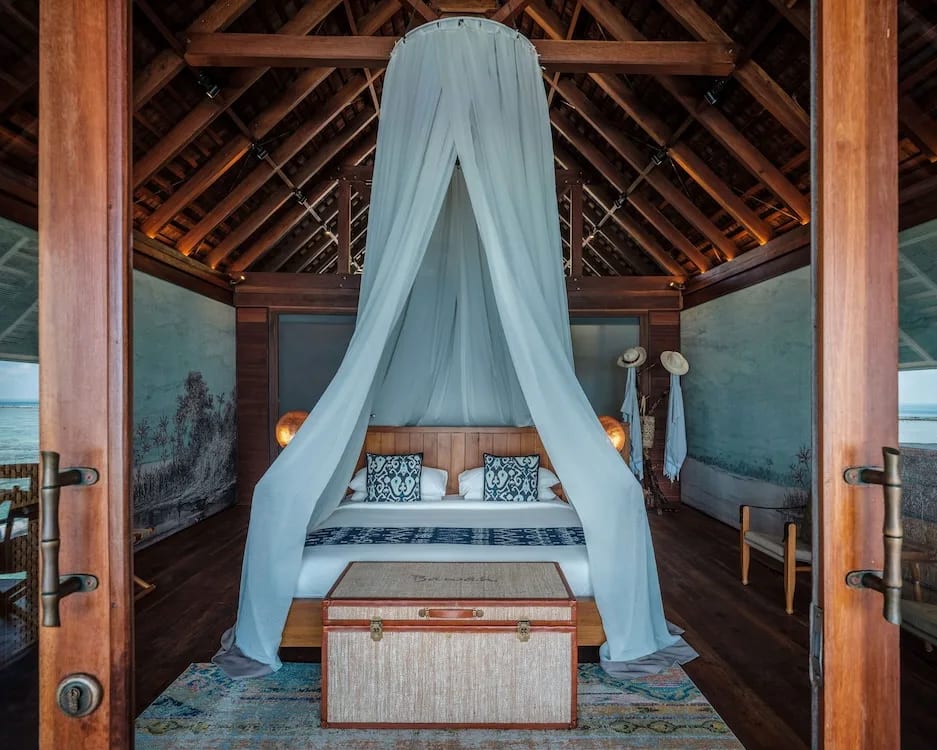
Image courtesy of Bawah Reserve
Indonesia’s outer reaches hold more pristine and remote frontiers. Raja Ampat’s karst limestone islands anchor the heart of the Coral Triangle, boasting incredible biodiversity. The historic Spice Islands retain quiet charm and volcanic scenery alongside world-class deep-sea diving. On the massive Kalimantan (Indonesian Borneo), dense rainforest waterways lead deep into indigenous Dayak territory and protected orangutan sanctuaries. Closer to Singapore, the Riau Archipelago offers low-key island retreats and luxury beach resorts, while Moyo Island serves as a secluded nature reserve featuring hidden jungle waterfalls and quiet luxury retreats.
Where to stay
Amanwana: The only resort located on the nature reserve of Moyo Island, this luxury tented camp blends safari-style glamping with pristine wilderness, featuring air-conditioned canvas tents among the jungle canopy, steps from white-sand beaches and crystal clear waters.
- Perks include a $100 hotel credit, daily breakfast, an upgrade, and extended check-in/out whenever possible.
Bawah Reserve and Elang Private Residence: This secluded Anambas Archipelago eco-resort spans six islands, including the six lodge Elang private island, offering overwater bungalows and land villas next to clear turquoise lagoons and untouched coral reefs.
Cruising to and around Indonesia
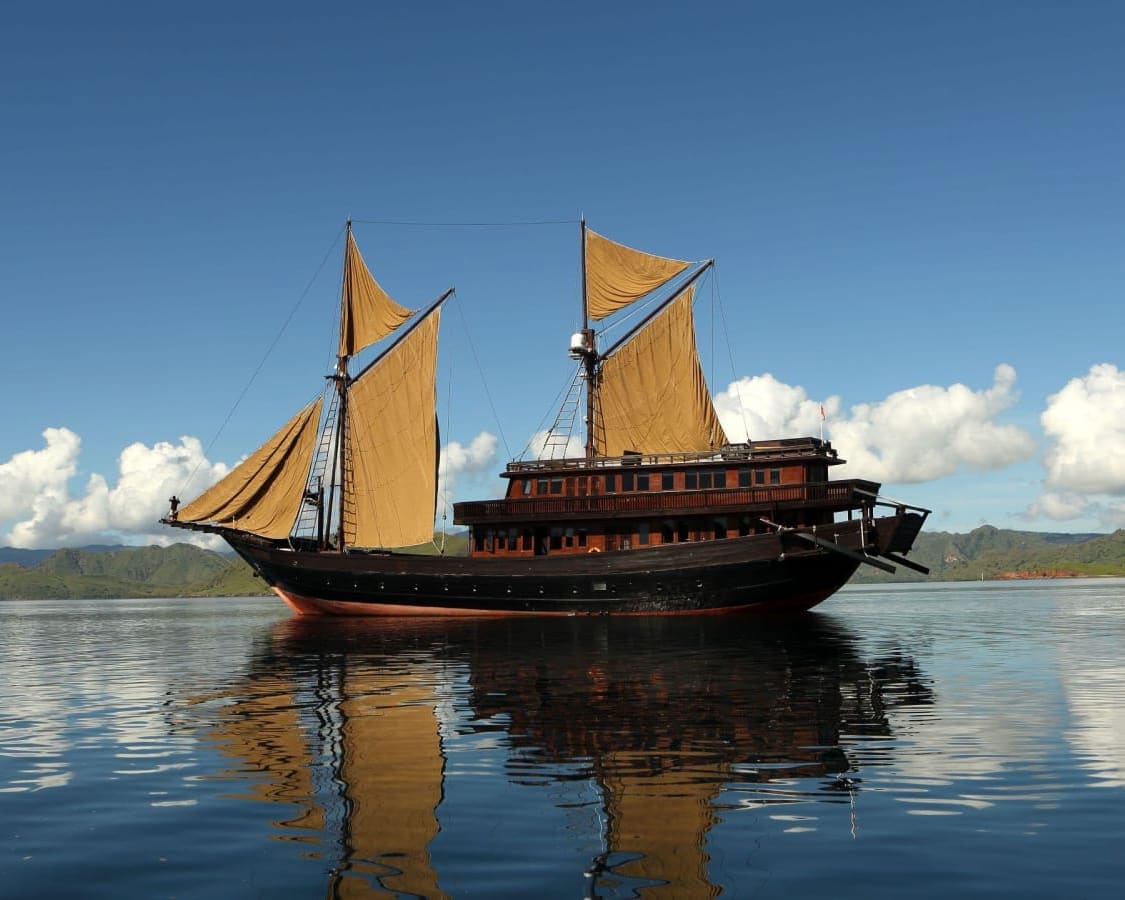
Image courtesy of Alila Purnama
Cruising across Indonesia’s vast archipelago is largely based around regional seasonality, as optimal sailing windows shift between destinations. Popular spots like Komodo National Park see peak season during April to September, Raja Ampat is best from October to April, and the Spice Islands see their best diving conditions between September to November.
Cruise lines feature ports across Indonesia on various itineraries. Weeklong sailings can be concentrated around Komodo National Park, the Spice Islands, or Raja Ampat in the Coral Triangle. Southeast Asia cruises often pair Indonesia with ports in Thailand, Malaysia, and Vietnam. Seasonal Singapore-to-Australia repositioning routes span two weeks and typically call at one or two ports in Indonesia. Some sailings also combine island stops in the Philippines with Indonesia. Indonesia ports are also a favorite for calls on longer world cruises and grand voyages spanning 100 or more nights.
Vessel size also changes the onboard and shore experiences. Traditional wooden phinisi yachts and small expedition ships navigate narrow coves, shallow reefs, and remote islands that larger ocean going vessels typically can’t. Travelers with mobility concerns should note these smaller craft utilize zodiac tenders, ladders, and beach landings.
Notable cruise lines
Aqua Expeditions: The 15-suite expedition yacht Aqua Blu—a former naval research vessel—offers intimate, active itineraries through Komodo, Raja Ampat, and the Spice Islands, pairing small-group Zodiac excursions with top-tier dining and an off-the-grid feel.
- Perks include $100 onboard credit per person.
Ponant: Operating small-capacity, luxury expedition ships, this French-flagged line combines a refined onboard atmosphere with ice- and shallow-water-capable hulls designed to reach remote Indonesian archipelagos.
- Perks include up to $200 shipboard credit per stateroom.
Silversea: Known for its all-suite, butler-serviced fleet, Silversea deploys ultra-luxury expedition and ocean vessels through the region, delivering structured shore excursions, fine dining, and seamless logistics across remote Indonesian island chains.
- Virtuoso Voyages Hosted Benefits available on select sailings.
Notable yachts and charters
Alila Purnama: A handcrafted phinisi featuring five refined suites for up to 10 guests, complete with its own fully equipped PADI dive center, expansive teak decks, and customized sailing routes through East Indonesia.
- Perks include a $200 shipboard credit and welcome amenity.
Amandira: A custom-built traditional phinisi offering a serene two-masted sailing experience with five spacious cabins for up to 10 guests exploring Komodo and Raja Ampat with signature Aman-trained staff and dive masters.
Rascal Voyages: Featuring custom-designed, ironwood-framed luxury yachts, this boutique charter outfit focuses on casually sophisticated, off-the-grid expeditions throughout the archipelago with tailored itineraries for families and private groups.
Silolona Sojourns: A premier luxury operator offering two meticulously handcrafted phinisi ships, both known for deep cultural immersion and highly personalized sailing itineraries that are also available for exclusive private charters.
Indonesia’s history and culture
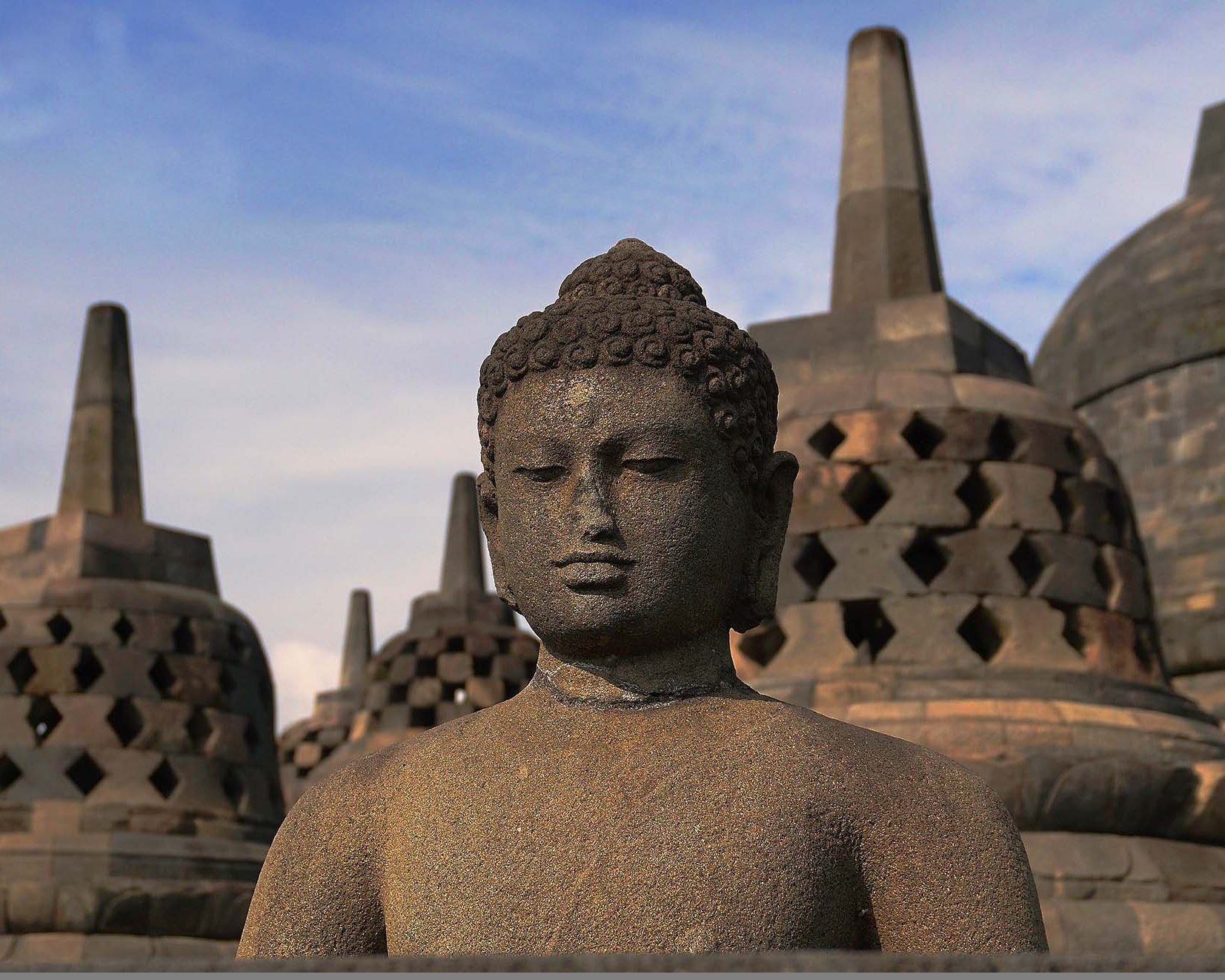
Indonesia’s history is rooted in its position along ancient maritime trade routes, where maritime empires like Srivijaya in Sumatra and the Hindu-Buddhist Majapahit in Java wielded influence over the Malacca and Sunda straits. The arrival of Arab, Indian, and Chinese traders introduced Islam and cultural traditions that merged with existing practices, giving rise to regional artistic expressions like Javanese wayang kulit shadow puppetry and intricate batik textiles. Spices—particularly nutmeg and cloves from the Maluku Islands—subsequently drew European powers, leading to centuries of Dutch colonial rule under the Dutch East Indies. Following independence in 1945 and decades of political transformation, the country has emerged as a diverse, resilient nation of over 1,300 ethnic groups where deeply rooted local traditions and regional languages coexist alongside a strong national identity.
Signature food and drinks
- Nasi goreng: Indonesia’s national dish, featuring fragrant fried rice wok-tossed with kecap manis (sweet soy sauce), garlic, and chili, topped with a fried egg
- Satay: Skewered chicken, goat, or beef grilled over open charcoal embers, served in a rich, sweet-and-savory peanut sauce
- Sambal: The foundational chili-based condiment presented alongside virtually every Indonesian meal
- Es cendol / es dawet: A dessert drink crafted from pandan-infused green rice-flour jelly droplets in rich coconut milk and sweetened with dark, smoky gula aren (palm sugar syrup) over crushed ice.
- Jamu: A centuries-old Javanese brew from crushed fresh roots, leaves, and spices—most famously jamu kunyit asam, a bright golden elixir of turmeric and tamarind
- Kopi Luwak: A rare gourmet coffee made from coffee cherries that have been eaten, digested, and excreted by the Asian palm civet
Cultural celebrations and events
- Pasola (February–March, Sumba): A colorful horseback spear-fighting competition tied to the Marapu indigenous faith that is traditionally viewed as a sacred offering to ensure soil fertility and a rich rice harvest.
- Komodo Festival (March, Flores): An annual celebration in Labuan Bajo honoring the unique marine and land wildlife of Komodo National Park with local Manggarai traditions like the iconic caci whip-fighting dance and regional Flores delicacies.
- Waisak / Vesak Festival (dates vary, Central Java): A holiday following the Buddhist lunar calendar celebrating the birth, enlightenment, and death of Buddha, with a procession to Borobudur for chanting, meditation, and a paper lantern lit night sky.
- Independence Day (August 17, nationwide): Communities across the country mark Indonesian independence with parades, cultural dances, and community games.
- Sekaten (dates vary, Yogyakarta): A weeklong Javanese Islamic festival commemorating the birth of the Prophet Muhammad, marked by royal processions, the playing of sacred 16th-century royal gamelan music sets, and a bustling night market.
What to do in Indonesia
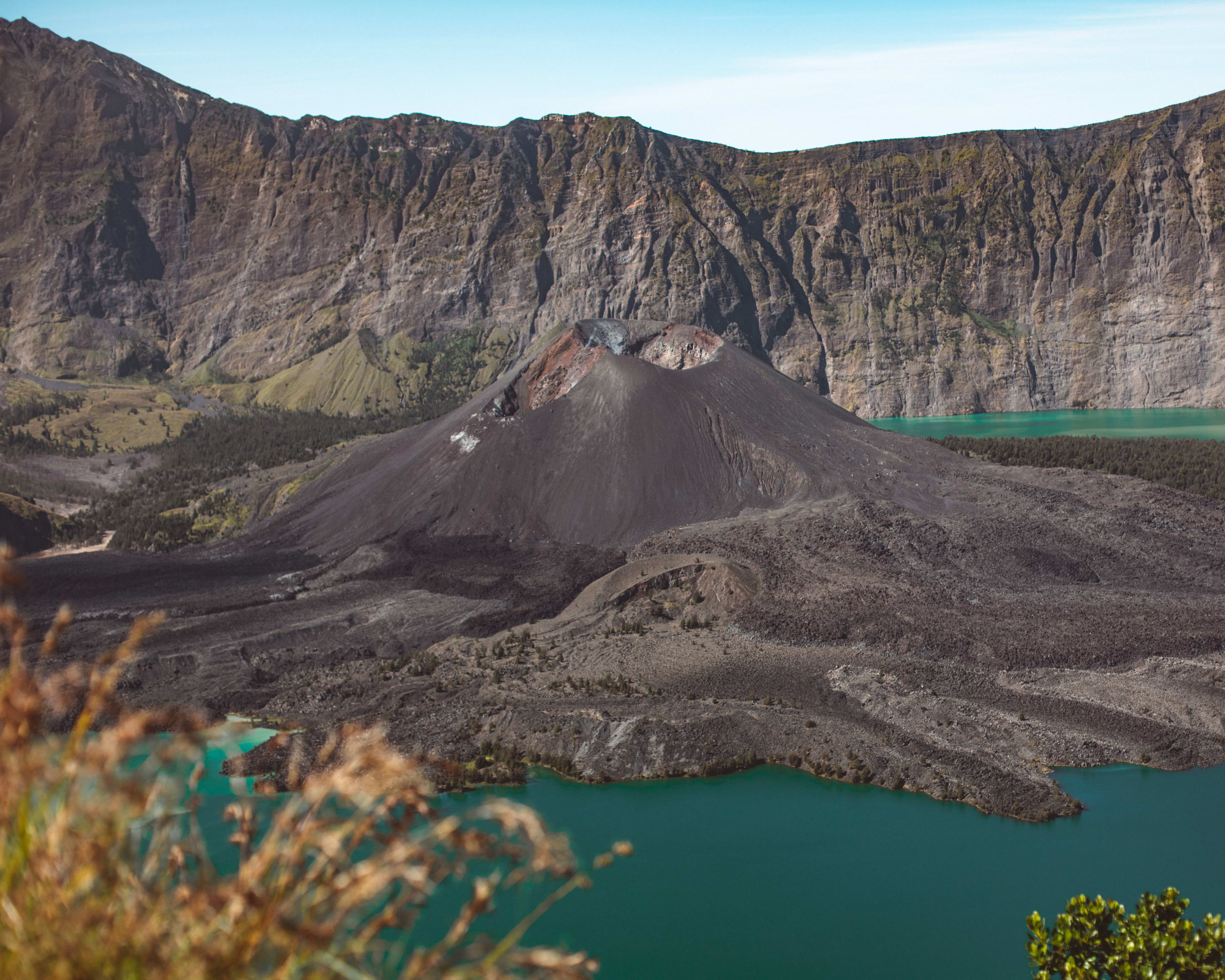
Volcanic crater hikes, ancient stone monuments, and vibrant marine reserves, Indonesia offers diverse landscapes and experiences across its vast archipelago.
Lombok
- Mount Rinjani: Trek up the slopes of Indonesia’s second-highest active volcano for sweeping sunrise views over its massive crater, Segara Anak lake, and nearby peaks.
- The Gili Islands: Unwind on the trio of car-free islets with soft white beaches, clear waters for snorkeling with sea turtles, and coastal bicycle paths offer a laid-back escape.
- Southern coast: Catch world-class surf breaks at Kuta Lombok, relax at quiet cove beaches, and hike up the grassy headland of Bukit Merese for panoramic sunset views.
- Waterfalls: Trek through jungle trails near Senaru to reach Sendang Gile and the dramatic, mist-shrouded twin cascades of Tiu Kelep.
- Selong Belanak Beach: Swim in calm, shallow waters or take surf lessons along a wide, crescent-shaped bay lined with gentle rolling waves and local warung stalls.
Java
- Mount Bromo: Journey across the misty “Sea of Sand” caldera in East Java and watch the sun rise over the smoking volcanic cone.
- Kawah Ijen: Hike by night to witness rare electric-blue sulfur flames flickering in the dark, followed by sunrise over the world’s largest acidic turquoise crater lake.
- Borobudur: Visit the world’s largest Buddhist monument, a 9th-century UNESCO World Heritage site adorned with hundreds of Buddha statues and stone relief panels.
- Prambanan Temple: Wander among the soaring, intricately carved stone spires of this 9th-century Hindu temple compound located just outside Yogyakarta.
- Yogyakarta: Explore Java’s cultural capital by visiting the 18th-century Sultan’s Palace, watching traditional wayang kulit shadow puppet performances, and sample local specialties like gudeg (sweet jackfruit stew).
Flores
- Komodo National Park: Sail through a marine sanctuary to spot wild Komodo dragons and swim at Pink Beach (Pantai Merah), where crushed red coral mixes with white sand.
- Padar Island: Climb the stone steps along the island’s central ridge for a vantage point overlooking three distinct colored bays of white, pink, and black sand.
- Kelimutu Crater Lakes: Take an early morning hike to view three adjacent volcanic lakes that change color from turquoise to red and black, due to chemical mineral shifts.
- Wae Rebo Village: Trek into the Manggarai highlands to visit an isolated village known for its distinctive, cone-shaped mbaru niang thatched houses.
- Bena Traditional Village: Step back in time at a megalithic, thatched-roof village where villagers maintain ancestral stone altars and traditional hand-weaving traditions.
Sumba
- Weekuri Lagoon: Float in a natural saltwater lagoon formed by ocean water seeping through porous limestone cliff walls.
- Lapopu Waterfall: Follow a jungle trail and cross a bamboo bridge to reach a multi-tiered, turquoise waterfall cascading over a cliff face.
- Mandorak Beach: Relax on a secluded pocket of white sand framed by dramatic coral cliffs and a narrow ocean channel.
- Wairinding Hills: Take in panoramic views of rolling, layered green or golden savanna hills that stretch across the interior of West Sumba.
- Walakiri Beach: Watch the sun set behind low-hanging mangrove trees whose twisted branches resemble dancing figures in the shallow tide.
Trips to add on
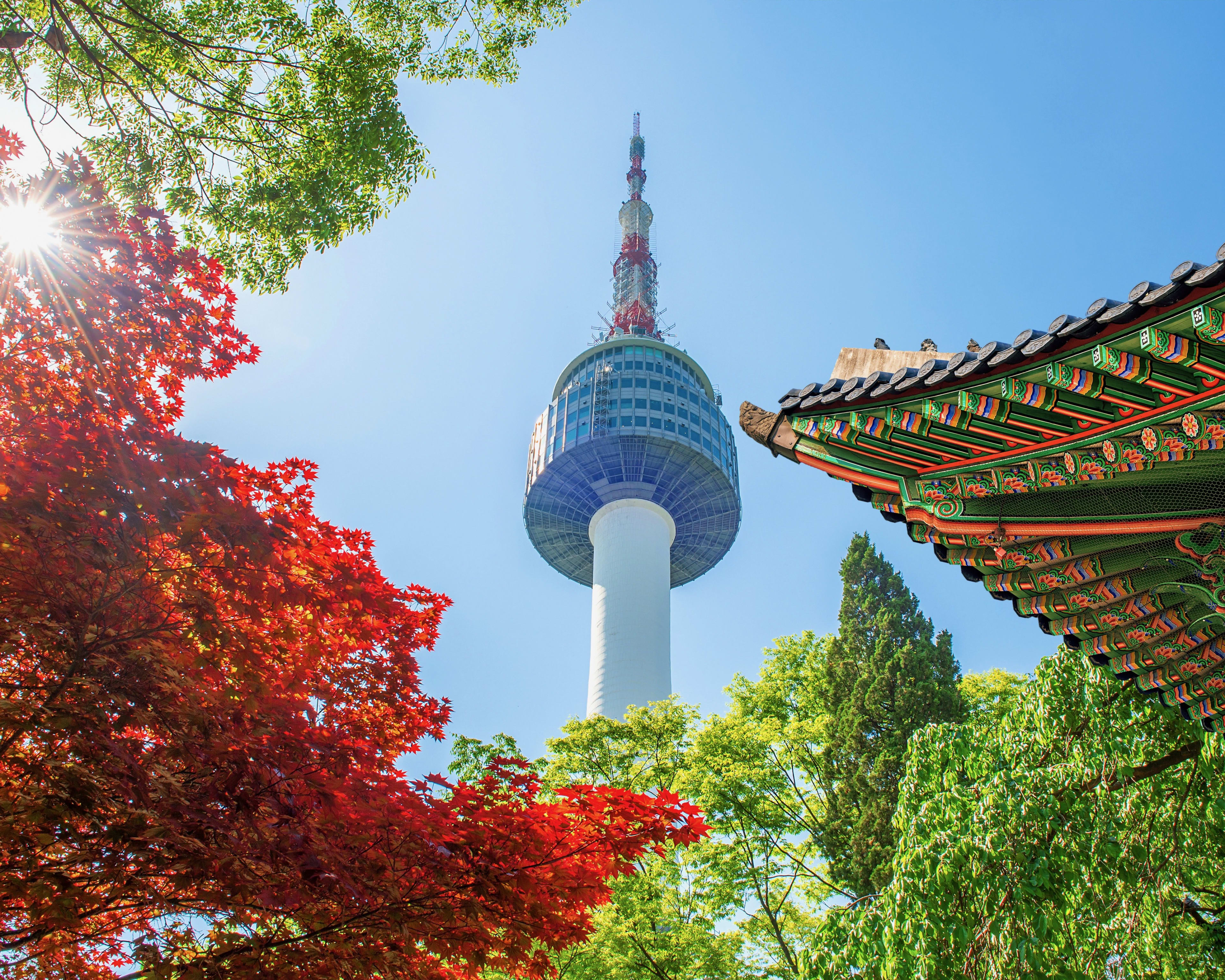
Indonesia’s vast geography makes pairing the archipelago with a gateway hub seamless, creating a contrast between island frontiers and dynamic Asian metropolises.
Bali (1–2 hour flight): The logical domestic extension, offering luxury clifftop resorts, wellness retreats in Ubud, and a bustling dining and beach club scene.
Singapore (2–3 hour flight): A hyper-modern city-state featuring futuristic botanical design at Gardens by the Bay, Michelin-starred hawker center street food, and world-class shopping.
Bangkok (4-hour flight): An energetic gateway that bridges quiet nature with high-octane street food culture, ornate gilded palaces, and a world-renowned rooftop cocktail scene.
Hong Kong (4.5–5 hour flight): An electric metropolis combining a dramatic neon-lit skyline, historic Star Ferry harbor crossings, and an unmatched global dining scene.
Seoul (7-hour flight): A sleek, culture-rich capital where ancient palaces and traditional wooden hanok villages sit alongside cutting-edge fashion districts and nightlife.
If not Indonesia…
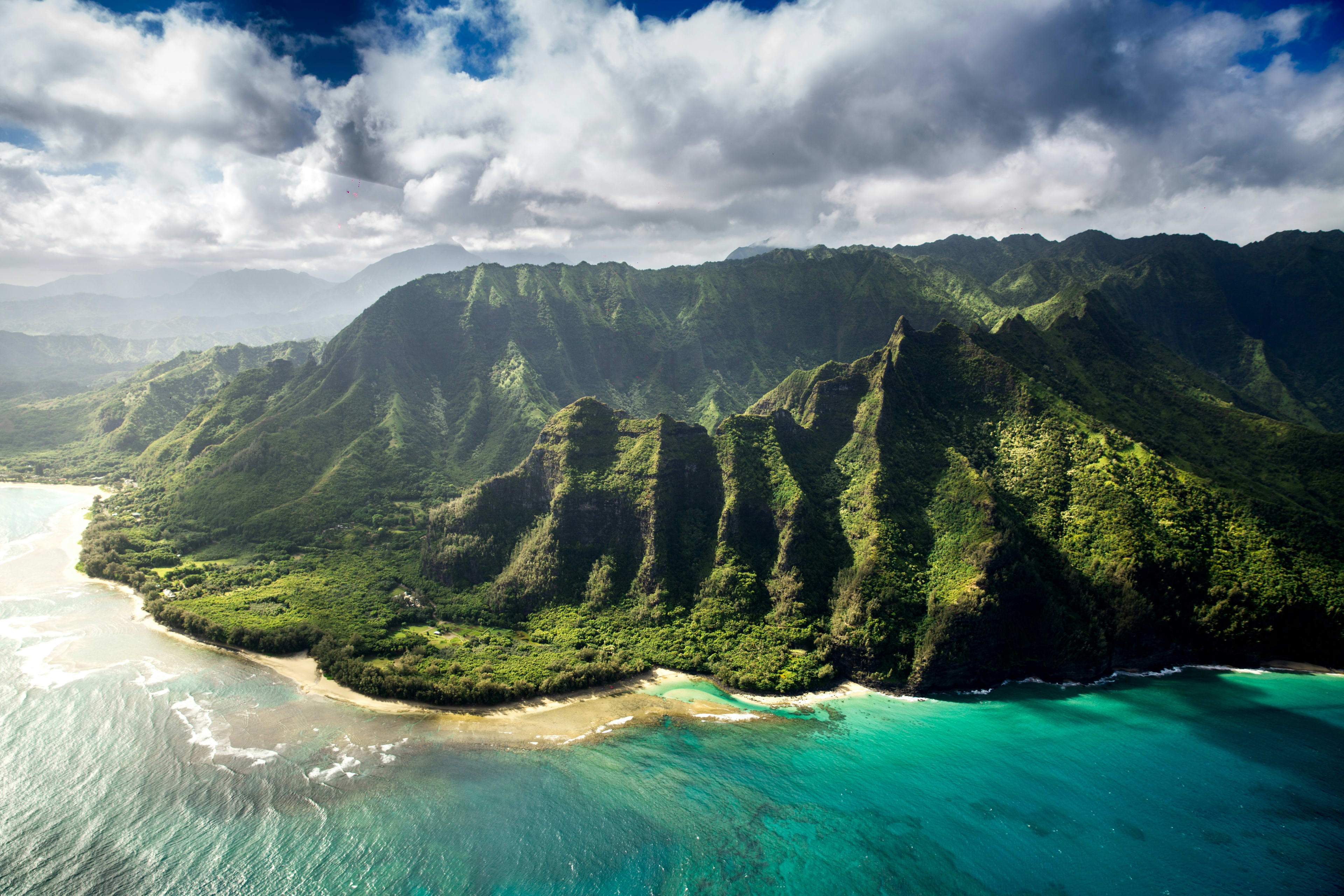
These global destinations offer a similar sense of island adventure and ecological wonder to Indonesia’s volcanic landscapes, marine biodiversity, and tropical archipelagos.
Hawai’i: A dramatic Pacific paradise where volcanic islands meet rich rainforests, with active calderas, world-class surf breaks, and hyper-dense tropical valleys.
Cambodia: Dense, jungle-entwined ancient heritage is anchored by the sprawling 12th-century stone temples of Angkor and the serene, floating river villages along Tonle Sap.
Costa Rica: A rugged, eco-conscious playground with cloud-forest canopies, active volcanoes, and dual-coast surf beaches that brim with wildlife.
New Zealand: This outdoor haven features dramatic glacial fjords, steaming geothermal valleys, and vast, untouched coastlines.
Norway: A cold-water alternative that trades tropical archipelagos for deep, dramatic fjords, towering granite peaks, cascading waterfalls, and serene coastal island chains.
Ready to go beyond Bali?
From Komodo dragons to barefoot-luxe hideaways, WeGalavant will plan your Indonesian island escape, with VIP perks where available.


BEST THE JOURNAL
of
European Christmas markets transform historic town squares into winter celebrations rooted in centuries-old traditions, regional craftsmanship, and seasonal gastronomy. Germany’s historic cities and towns, from Dresden to Nuremberg, lay the foundation with classic timber chalets, handcrafted wooden folk art, and warm Glühwein. Imperial capitals like Vienna and Prague add fairy-tale backdrops, backdrop light displays, and […]
Beyond the well-known shores of Bali, Indonesia is made up of a vast tapestry of distinct regional identities, untamed nature, spiritual traditions, and vibrant local life across thousands of volcanic islands. Java pulls travelers into its cultural core with towering 9th-century stone monuments, active volcanic peaks like Mount Bromo, and the artistic heritage of Yogyakarta. […]


+ Show / Hide Comments
Share to: